In the field of industrial cooling, energy consumption control has long been a key concern for enterprises. Traditional cooling towers mostly adopt a drive structure of asynchronous motor + gearbox, in which energy undergoes multiple conversions during transmission, resulting in significant losses. The emergence of cooling tower direct-drive motors has fundamentally changed this situation. This paper compares and analyzes the energy-saving differences between the two solutions from the perspective of energy transmission paths.
In traditional drive systems, standard motors output high speed, which is reduced to the low speed required by the fan through a gearbox (gears or belts). The efficiency of a gearbox is typically 85%–95%, meaning 5%–15% of energy is lost as heat. In addition, misalignment of couplings, belt slippage, and other issues cause extra losses. As a result, the overall efficiency from electric power to the fan shaft end is often less than 85%.
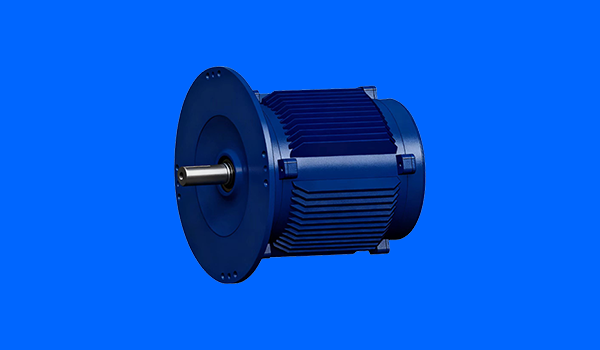
Cooling tower direct-drive motors are completely different. Designed with low speed and high torque, the motor rotor is directly connected to the fan hub without any intermediate transmission components. Electric energy is converted directly into mechanical energy driving the fan, with a near-zero transmission path. This one-to-one drive mode achieves an overall efficiency of over 95%. Compared with traditional solutions, cooling tower direct-drive motors can save 15%–25% of electricity consumption.
In addition to higher efficiency, direct-drive motors eliminate no-load losses caused by gearboxes. In traditional systems, the gearbox still consumes energy even when cooling demand is low. Direct-drive motors can cooperate with variable frequency control to significantly reduce speed under low loads, realizing energy supply on demand. This precise matching further enhances the energy-saving effect.
In long-term operation, the energy-saving benefits of cooling tower direct-drive motors are considerable. Taking a cooling tower operating 8,000 hours per year as an example, the direct-drive solution can save tens of thousands of kilowatt-hours of electricity annually. Therefore, for enterprises pursuing energy efficiency upgrades, replacing with direct-drive cooling tower motors is one of the technical approaches with the shortest return on investment period.



 Fax:0512-58592061
  E-mail:ZhangW@jiujiujiayi.com.cn
  Add:No. 18, Xinjing Middle Road, Yangshe Town, Zhangjiagang City, Suzhou City, Jiangsu Province